The Cost of Lower Recovery
One of the biggest operating costs in water treatment isn't always the treatment system itself.
Typically, managing the concentrate that remains after water treatment is where excess expenses are incurred.
Every treatment system splits wastewater into two streams:
One becomes treated water.
The other becomes concentrate.
Any concentrate has to be stored, transported, or disposed of, making it an important contributor to long-term operating costs.
Recovery directly influences how much water becomes treated and how much remains as concentrate. For facilities treating landfill leachate and other challenging wastewaters, even small improvements in recovery can significantly reduce the volume requiring disposal over the life of a system.
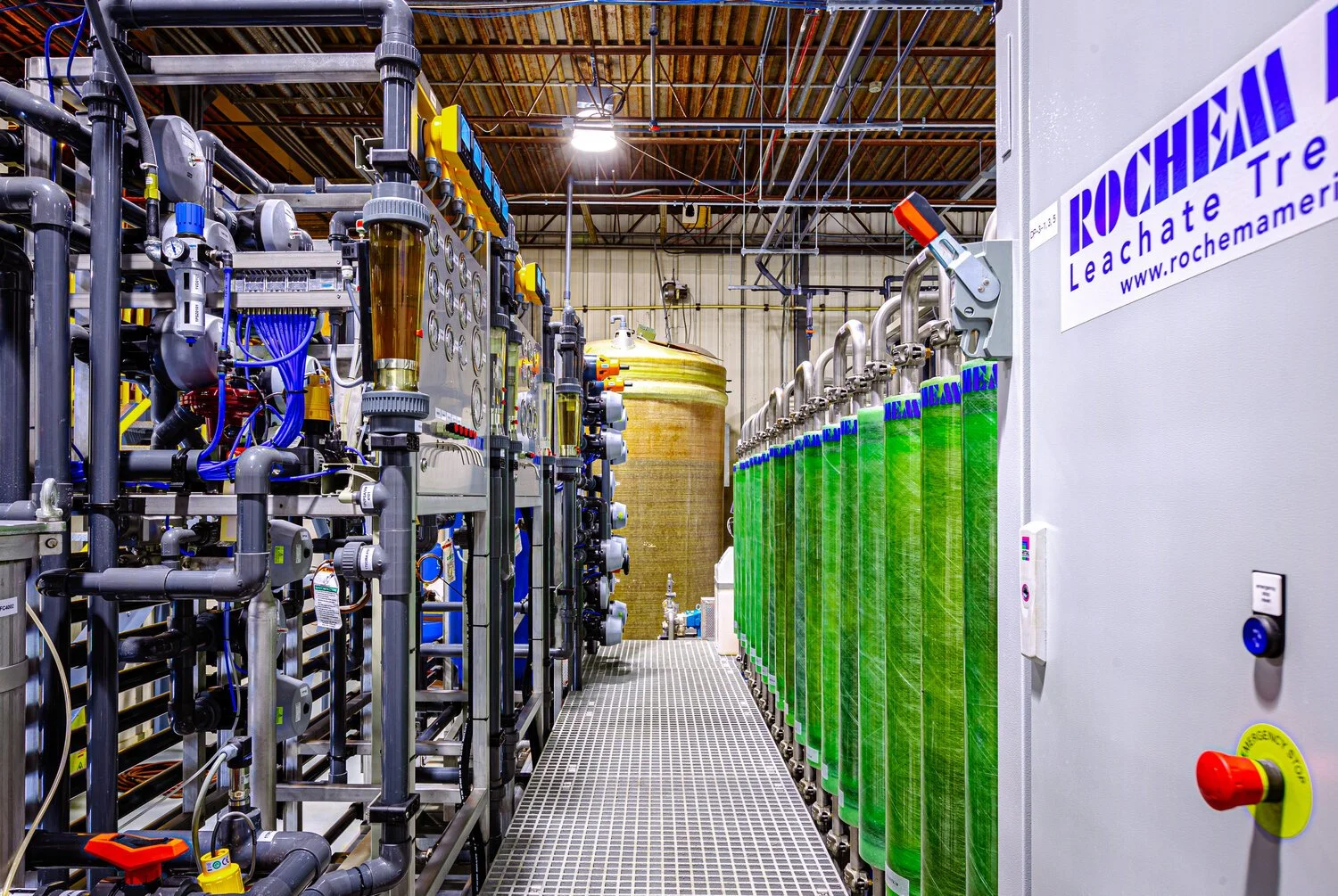
At ROCHEM, we specialize in treating some of the industry's most challenging water chemistries while achieving industry-high recovery rates (95% or more). Higher recovery rates directly translate into lower disposal volumes and lower overall costs for our customers.